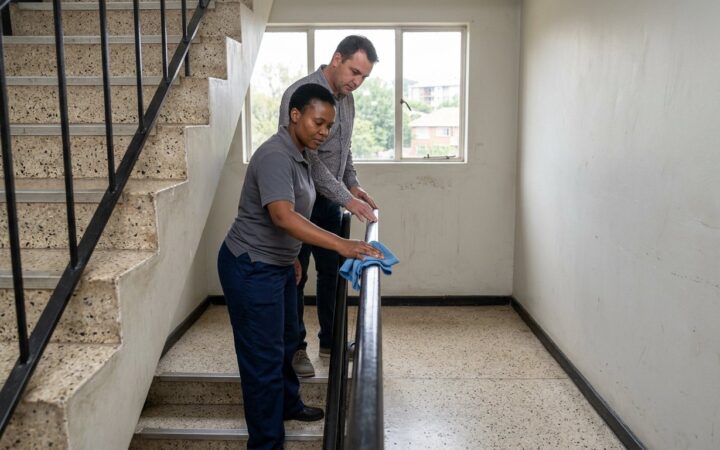
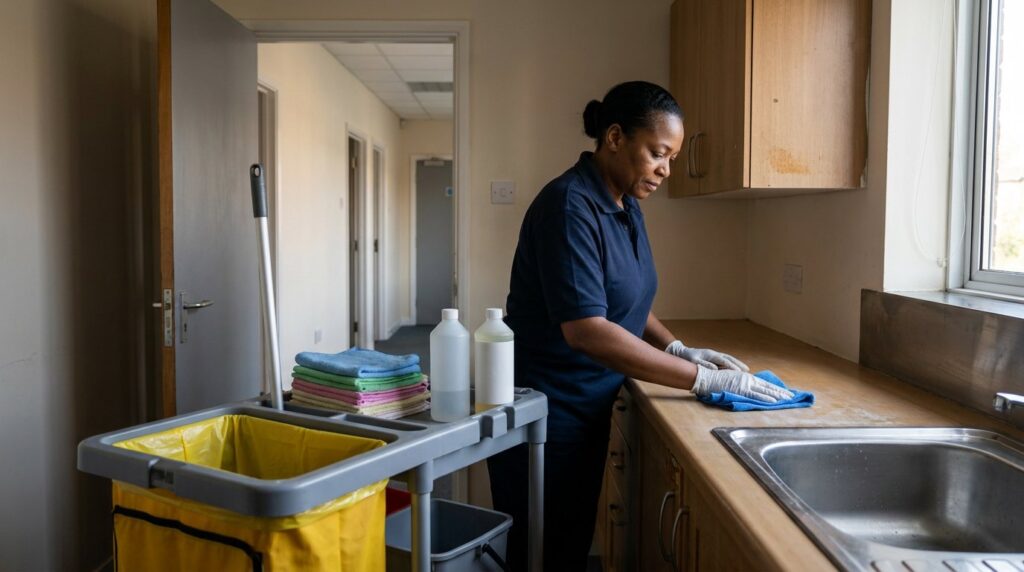
A cleaning contract can leave avoidable gaps when it names rooms but not the work required in them. An effective office cleaning scope of work lists each area, its routine tasks and frequency, as well as consumables, waste handling, access controls and how to report exceptions. The details should reflect the building’s layout, use and operating hours.
A clear schedule gives the cleaning team and site staff a shared reference for what is expected. It helps prevent routine tasks from being missed and responsibilities from becoming unclear.
This guide explains which areas to include, how to distinguish recurring and periodic tasks, and what to document about supplies, security and reporting. Use it as a practical basis for defining the work and keeping service expectations transparent.
Key Takeaways
- List each area to be cleaned and the specific tasks expected there, so responsibilities are clear.
- Set out how often routine and periodic tasks must be completed, based on the building’s use and operating needs.
- Include practical requirements for waste, consumables, access and reporting so the cleaning team can follow a consistent process.
- Use clear written standards to support supervision and review whether the agreed work is being completed.
Office cleaning scope of work
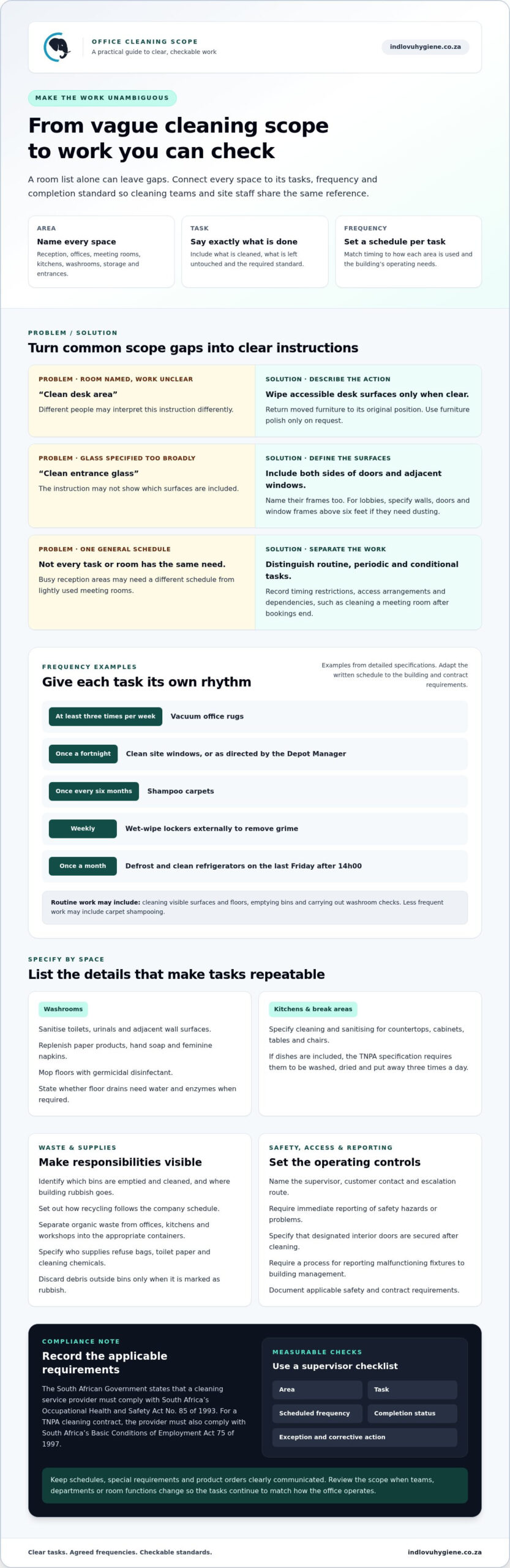
A useful cleaning specification connects each room to its tasks, frequency and completion standard. Start with a site plan, then name every space, including reception, open-plan offices, meeting rooms, kitchens, washrooms, storage areas and entrances. For each area, state what the team cleans, what it leaves untouched and how often the work is required. This makes responsibilities visible and supports consistent checks against the agreed schedule.
Separate routine work from periodic and conditional tasks. In an office, daily duties might include cleaning visible surfaces, floors and bins, along with washroom checks; less frequent work may include carpet shampooing. Match the schedule to how staff use each area: a busy reception has different needs from a lightly used meeting room. Record timing restrictions, access arrangements and task dependencies, such as cleaning a meeting room after bookings end.
Describe tasks clearly enough for staff and supervisors to assess them. “Clean desk area” can mean different things to different people. A clearer instruction is to wipe accessible desk surfaces only when they are clear, then return any moved furniture to its original position. Specify whether furniture polish is used only on request. For entrance glass, identify both sides of doors and adjacent windows, including their frames. In lobbies, name walls, doors and window frames above six feet if they need dusting.
Set frequencies for specialist or less routine tasks in the schedule. Examples in detailed cleaning specifications include:
- Vacuum office rugs at least three times per week.
- Clean site windows once a fortnight or as directed by the Depot Manager.
- Shampoo carpets once every six months.
- Wet-wipe lockers externally weekly to remove grime.
- Defrost and clean refrigerators once a month on the last Friday after 14h00.
These examples show why each task should have its own frequency, rather than relying on a general instruction. Adapt the written schedule to the building and contract requirements.
List washroom tasks individually. Include sanitising toilets, urinals and adjacent wall surfaces; replenishing paper products, hand soap and feminine napkins; and mopping floors with germicidal disinfectant. State whether floor drains need water and enzymes when required. In kitchens and break areas, specify cleaning and sanitising countertops, cabinets, tables and chairs. If dishes are included, a TNPA specification requires them to be washed, dried and put away three times a day.
Set out waste handling and supplies as operational responsibilities. Identify which bins are emptied and cleaned, where building rubbish goes, and how recycling follows the company schedule. Separate organic waste from offices, kitchens and workshops into the appropriate containers. Specify who supplies refuse bags, toilet paper and cleaning chemicals. State that debris outside bins is discarded only when marked as rubbish, so papers or equipment awaiting collection are not removed.
Include controls for safety, access and reporting. According to the South African Government, a cleaning service provider must comply with South Africa’s Occupational Health and Safety Act No. 85 of 1993. For a TNPA cleaning contract, the provider must also comply with South Africa’s Basic Conditions of Employment Act 75 of 1997, according to the South African Government. Name the supervisor, customer contact and escalation route. Require immediate reporting of safety hazards or problems, and specify that designated interior doors are secured after cleaning.
Finish with measurable checks. A supervisor can use a checklist to record the area, task, scheduled frequency, completion status and any exception. Include a process for reporting malfunctioning fixtures to building management. The scope should also define how cleaning schedules, special requirements and product orders are communicated. Clear records help both parties identify missed work, assign corrective action and review whether the service still suits the office as its use changes.
These details should also be reflected in task instructions so cleaners can follow them consistently and supervisors can confirm completion. Under the TNPA cleaning specification, lockers must be wet-wiped externally weekly to remove grime. Entrance and lobby duties include dusting walls, doors and window frames above six feet. Furniture should be straightened and returned to its original position. Restroom floor drains should receive water, with enzymes used as needed, and restroom floors should be mopped using a germicidal disinfectant. The cleaning service provider must comply with South Africa’s Occupational Health and Safety Act No. 85 of 1993, as stated by the South African Government.
Indlovu Hygiene Solutions: Office Cleaning
Indlovu Hygiene Solutions provides office cleaning for workplaces that need a defined, recurring service. Its contract cleaning supports businesses with ongoing site requirements. Set out the areas, tasks and frequencies your office needs, then use that scope to clarify the service expected.
This is a practical next step when internal teams need cleaning support or an existing arrangement requires a clearer task schedule. For facilities that include other types of premises, Indlovu Hygiene Solutions also provides factory and industrial cleaning and body corporate cleaning.
Share your site’s cleaning requirements with Indlovu Hygiene Solutions to discuss office cleaning. Contact the team or visit indlovuhygiene.co.za.
Put the agreed scope into operation
A written schedule is most useful when it guides day-to-day coordination. Keep the agreed requirements accessible to the people responsible for site operations, and use them to align cleaning with room use, access arrangements and workplace changes. When teams move, departments expand or rooms take on new functions, review the scope to ensure the tasks still match how the office operates.
Turn your requirements into a workable service arrangement. A clearly structured office cleaning scope of work gives Indlovu Hygiene Solutions a practical basis for understanding the areas and tasks involved. It also gives your facilities team a shared reference for managing the service and communicating changes through the appropriate contact.
For a discussion about your office’s cleaning requirements, contact Indlovu Hygiene Solutions. A considered scope gives your workplace a clear foundation for ongoing cleaning coordination.