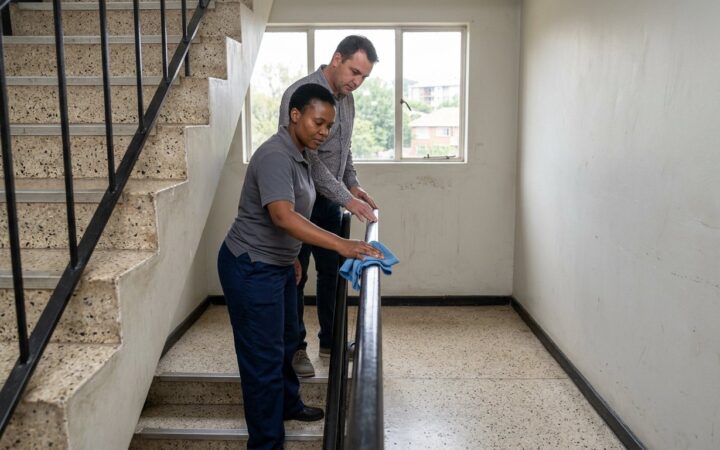
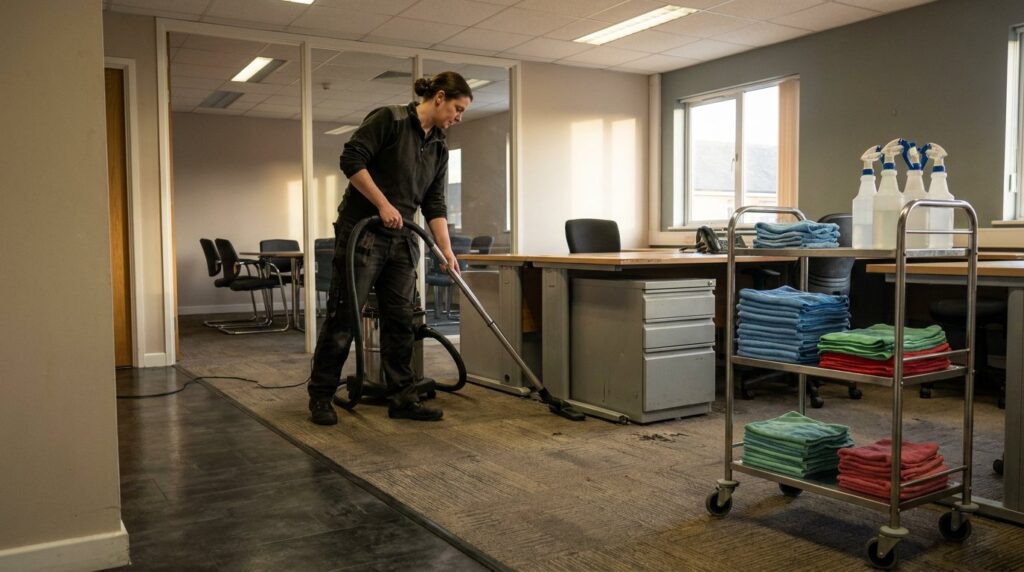
An individual cleaner may cost less and offer a more personal arrangement. Office cleaning companies can provide cover and supervision, which may suit a business that needs continuity. Choose based on the cover, oversight and working arrangements your premises require, not the quote alone.
Cost matters, but a lower figure is useful only when you know what work it covers. The schedule, included tasks, supplies and supervision all affect how proposals compare.
This guide explains when a company or an individual cleaner may be the better fit. It also shows how to compare itemised quotes, assess cleaning during or after working hours, and understand what affects office cleaning costs in South Africa. Use these practical points to assess the scope and service arrangements before deciding.
Key Takeaways
- Choose cleaning hours around site use, staff access and the areas that need regular attention.
- Weigh the continuity and supervision a company can provide against the more personal arrangement of an individual cleaner.
- Compare itemised proposals by cleaning scope, frequency, supplies and oversight, not only by the total.
- Assess how floor area, bathrooms, kitchens and specialist tasks shape the cleaning schedule and overall cost.
When is cleaning done, during or after hours?
After-hours cleaning is the most common option in South Africa. It reduces disruption to staff, meetings and customer visits. Daytime cleaning can suit busy premises where kitchens and bathrooms need attention throughout working hours. A Sandton office with frequent client meetings may prefer quieter evening cleaning, whilst a shared workplace may need washroom checks during the day.
Set the schedule around how each area is used. List the tasks required on every visit, then identify work that can happen less often. For example, desks and kitchen surfaces may need routine attention, while a boardroom used occasionally may need cleaning after bookings. Put the frequency and areas in the written cleaning schedule so staff and cleaners share the same scope.
Set out site access procedures before work begins. Walk through the premises and identify entrances, alarm arrangements, restricted rooms and storage areas. Agree who authorises entry, how keys or access cards are controlled, and where cleaning staff can store equipment. Record these instructions in the service plan so building management has a clear reference if arrangements change.
- Reception: agree how cleaners enter when the front desk is unattended.
- Meeting rooms: schedule cleaning around bookings and sensitive documents.
- Kitchen and bathrooms: set daytime checks if usage remains constant.
For daytime cleaning, agree how cleaners will work around employees, including which rooms are cleaned first and how staff are notified. For after-hours cleaning, define the permitted access window and how the premises are secured when work ends. Clear procedures make timing and responsibilities easier to manage without disrupting normal operations.
Review the plan when occupancy, operating hours or room use changes. A new shift pattern, for example, may make evening cleaning less suitable. Update the task sequence and access instructions together, then share the revised schedule with relevant site contacts. Clear arrangements help cleaning teams work consistently on each visit.
Should I hire a company or an individual cleaner?
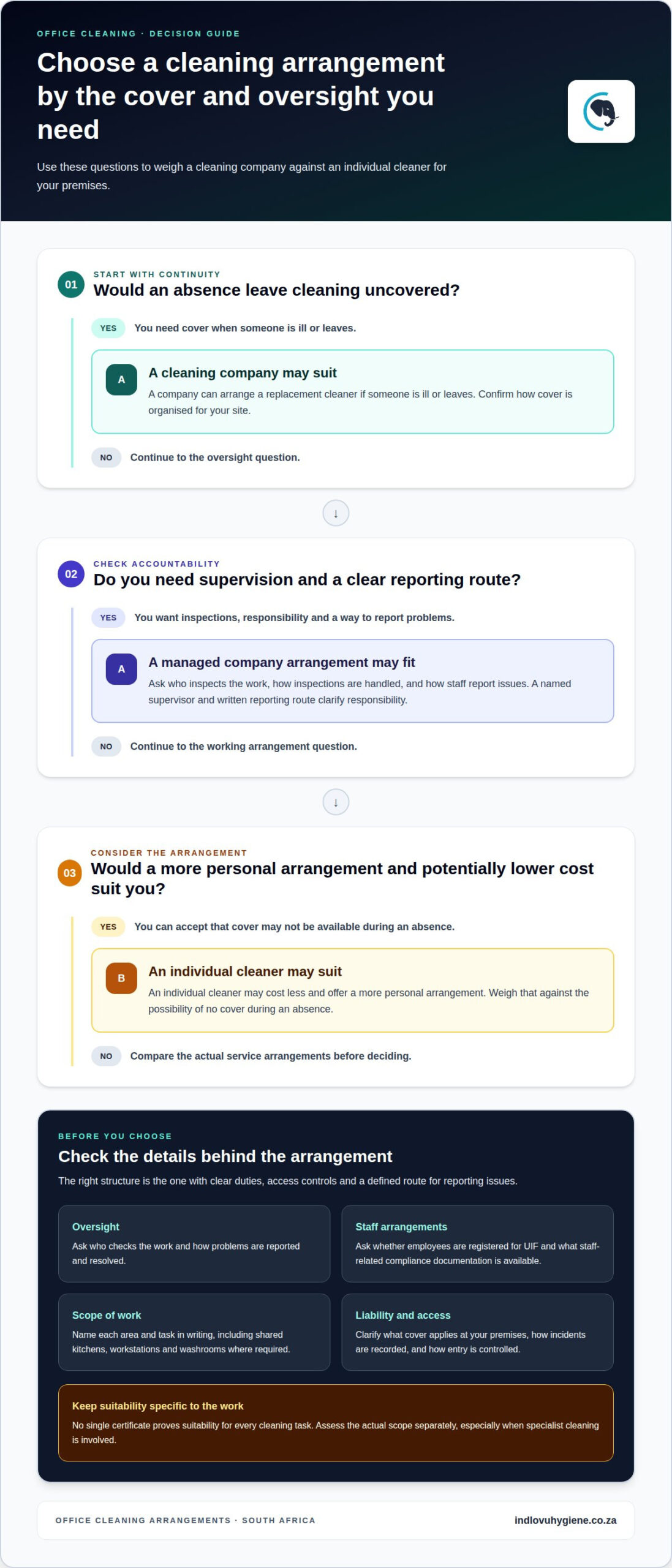
A company may suit you when continuity, cover and supervision matter. It can arrange a replacement cleaner if someone is ill or leaves. An individual cleaner may cost less and offer a more personal arrangement, but there may be no cover during an absence. Match the arrangement to your staffing needs and site schedule.
Ask who inspects the work, how inspections are handled, and how staff report problems. A named supervisor and written reporting route clarify responsibility. You can also ask whether employees are registered for UIF and what staff-related compliance documentation is available. These checks help distinguish managed service delivery from a direct individual arrangement.
No single certificate proves suitability for every cleaning task. Assess the actual scope separately, especially when specialist cleaning is involved. For routine office cleaning, consider staff arrangements, supervision and accountability alongside any credentials presented.
Services vary by company and contract. Office cleaning may include routine tasks, deep cleaning, post-construction cleaning, or a combination. Check that the written scope names each area and task. For example, confirm whether shared kitchens, workstations and washrooms are included rather than assuming they are covered.
Cleaning services may be offered by national, regional or local firms, as well as individual cleaners. For a Sandton workplace, shortlist options that serve the site and match its cleaning scope. Compare staffing and oversight arrangements, not just business size or name.
Discuss liability cover, staff arrangements and procedures for handling loss or damage. Ask what cover applies at your premises and how an incident is recorded. Without a clear arrangement, it may be uncertain who entered the site, who is accountable for damage, and how complaints are resolved. Written procedures help reduce that uncertainty.
For a managed, recurring arrangement, review office cleaning arrangements alongside your site requirements. The right structure is the one with clear duties, access controls and a defined route for reporting issues.
Comparing cleaning quotes
Before hiring, walk through the Sandton premises with each company. Compare two or three itemised proposals against the same site requirements. This makes differences in scope, working hours, supplies and supervision easier to identify. A quote prepared without a site visit may overlook busy washrooms, separate kitchen areas or restricted rooms.
Check that each proposal names the areas to be cleaned, visit frequency and included tasks. Confirm whether desk surfaces, floors, kitchens and washrooms are covered. Carpet and window cleaning may be quoted separately from routine office cleaning. Keep specialist tasks distinct when comparing recurring proposals so the totals reflect equivalent work.
Materials matter too. Establish whether the service includes cleaning products, consumables and equipment, or whether the premises supplies them. Note each responsibility beside the relevant task. If one proposal includes washroom consumables and another excludes them, the totals do not cover the same scope.
Check references from clients with similar premises, then speak with at least one. Ask about schedule consistency, supervision and how reported issues were handled. Review the inspection process and problem-reporting route alongside the quote. A trial period or notice clause can define how to respond if standards decline.
- Scope: match areas, tasks and frequency across proposals.
- Operations: compare hours, access arrangements and supervisory checks.
- Supplies: record who provides materials, consumables and equipment.
The price depends on the premises and is provided after a quote request. Floor area, visit frequency, bathrooms, kitchens, supplies and flooring all affect the cost. Compare the written scope and operational arrangements before weighing the total. This gives you a like-for-like basis for choosing a suitable service.
Use the pre-quote walk-through with each cleaning company to settle any remaining questions before the proposal is prepared. Ask what services the price includes, how often the cleaner can work, whether after-hours cleaning is available, and whether references can be provided; clarify whether the company supplies cleaning materials, consumables and equipment. The listed average price for cleaning contractors in South Africa is R 350 per week; the listed nationwide great-value price is R 300 per week, and the listed nationwide premium price is R 450 per week. Treat these as reference points, not a replacement for a premises-specific quote.
What affects the price of office cleaning?
For a Sandton office, floor area is one cost factor. A larger site may require more time or staff. Cleaning frequency also changes the scope: regular visits spread routine tasks across the schedule, while less frequent visits may involve more work each time. The number of bathrooms and kitchens matters because these areas need task-specific attention.
Flooring affects the work involved. An office with carpet has different routine needs from one with hard floors. Consumables and equipment also affect a proposal, depending on who supplies them. List each area, floor type and supply responsibility before comparing costs. This helps explain why proposals for apparently similar premises may differ.
Separate specialist work from routine cleaning. Deep cleaning, mould removal and post-construction cleaning involve different tasks from scheduled office maintenance. Carpet and window cleaning may also be quoted separately. A clear schedule distinguishes recurring duties from occasional or one-off work instead of combining them into an unclear total.
Yes, cleaning teams should follow the workplace’s health and safety procedures. Include site-specific instructions in the service arrangement, such as restricted areas, hazard reporting and safe equipment storage. For example, a site contact can explain how staff report a spill or block access to a room during cleaning.
A standard office cleaning contract should specify the areas covered, cleaning frequency and included tasks. It should also define working hours, supply responsibilities and how work is supervised. For example, state whether kitchen surfaces and washrooms are cleaned on each scheduled visit. These details give both parties a consistent reference for delivery and review.
Use the site assessment to connect the scope with its cost drivers. Record floor area, bathrooms, kitchens, flooring and visit frequency, then separate specialist tasks. The price depends on the case and is provided after you request a tailored cleaning quote.
Indlovu Hygiene Solutions: Office Cleaning
Indlovu Hygiene Solutions provides office cleaning and contract cleaning for workplaces that need a defined service arrangement. Its services also include factory and industrial cleaning, and body corporate cleaning. For a Sandton office, it is a relevant option when you need recurring cleaning rather than an individual arrangement.
Set out the areas, tasks and visit frequency that matter to your premises. Include access arrangements and operational requirements, such as keeping particular rooms available during working hours. This gives the service discussion a practical basis and helps align the cleaning scope with how your workplace operates.
Contact Indlovu Hygiene Solutions to discuss office cleaning for your premises.
Set a clear standard for your next cleaning arrangement
Turn your site’s requirements into a practical service brief. Record the areas that need attention, your preferred schedule and the operational standards your team expects. This gives discussions with office cleaning companies a clear purpose and keeps the decision focused on suitability, not presentation alone.
Indlovu Hygiene Solutions provides office cleaning, contract cleaning and factory or industrial cleaning. If your workplace needs a managed cleaning arrangement, discuss your premises’ requirements and the scope that would support them.
Contact Indlovu Hygiene Solutions to discuss your office cleaning needs. A clear starting brief can help you move towards an arrangement that fits your workplace.
Frequently Asked Questions
How much do office cleaning services cost in South Africa?
Office cleaning costs depend on the premises and agreed service scope. Floor area, visit frequency, bathrooms, kitchens, flooring and who supplies consumables all affect the work involved. Specialist tasks such as mould removal or post-construction cleaning are separate from routine upkeep. For a useful budget, describe the site and required tasks when requesting a tailored quotation.
How can I compare office cleaning companies in South Africa?
Assess how each company turns your requirements into a workable service plan. Check that the proposed task sequence suits the building’s layout and operating needs. Consider how service records, changes to site instructions and routine performance feedback will be managed. A clear process for these details helps distinguish proposals that look similar on paper.
How often should an office be professionally cleaned?
Set cleaning frequency according to occupancy, room use and the condition of shared facilities. A busy office with frequently used kitchens may need more attention than a small workplace with limited daily foot traffic. Separate routine duties from periodic deep cleaning, then review the schedule if staffing levels, working patterns or room use changes.
How do I get quotes from office cleaning companies in South Africa?
Prepare a brief site description before requesting quotations. Include the premises’ location, operating hours, occupied areas, access constraints and any specialist cleaning needs. For workplaces in Sandton and nearby Gauteng locations such as Edenvale, Bedfordview, Midrand, Rosebank and Fourways, these details help define the proposed work. Share the same brief with each company to compare responses consistently.