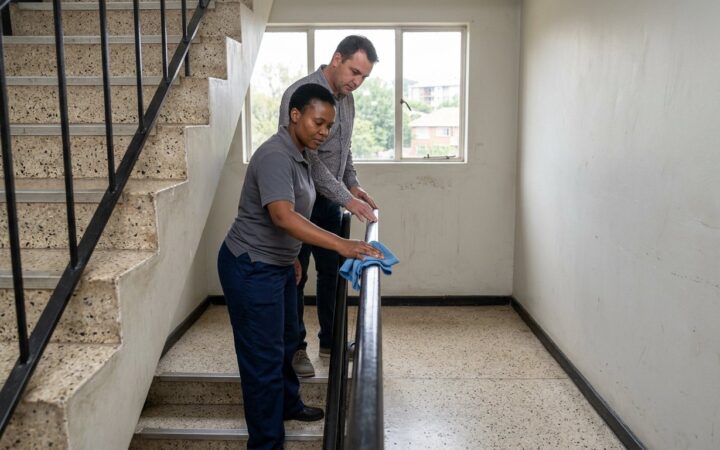
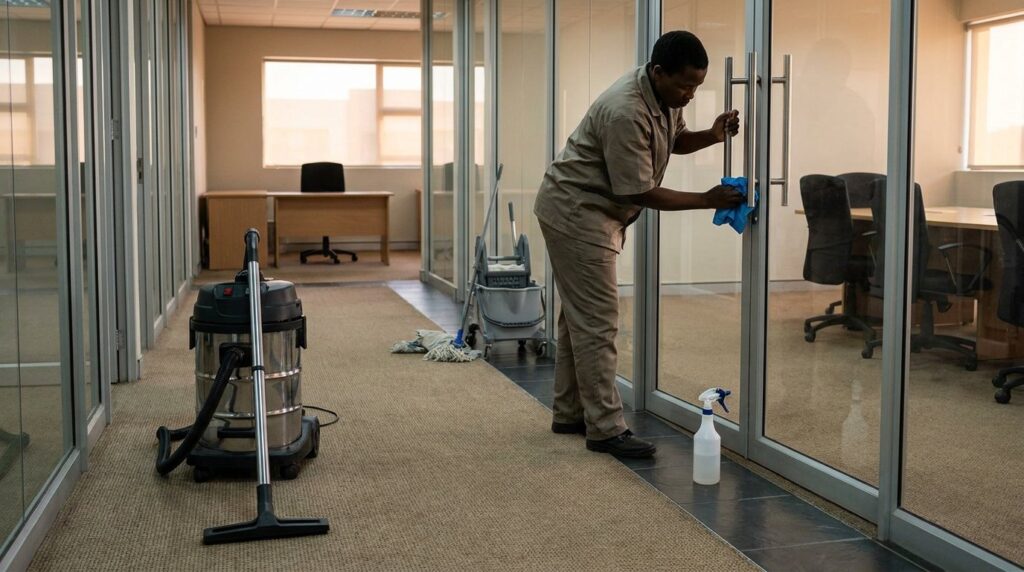
A reliable daily cleaning plan starts with your workplace’s needs, the areas in use and the required schedule. To arrange office cleaning services in Gauteng, outline these requirements, agree on a tailored scope of work and set the cleaning frequency. The plan should reflect how your workplace operates, rather than rely on a fixed checklist.
Consistent cleaning supports an orderly workplace, but planning it takes more than choosing a frequency. The scope should account for the premises, shared areas and routine priorities.
This article explains how to arrange office cleaning, develop a custom plan and organise daily cleaning for offices and other workplaces. It also covers what shapes the scope and how to move from an initial site brief to a clear service arrangement.
Key Takeaways
- Prepare a clear booking brief by outlining the workplace, cleaning priorities and preferred schedule.
- Match the cleaning scope to the type of workplace and the areas staff use each day.
- Build a custom plan around your premises, routine tasks and required cleaning frequency.
- Set out daily cleaning tasks clearly so the service can follow a consistent workplace routine.
Booking and confirming a service
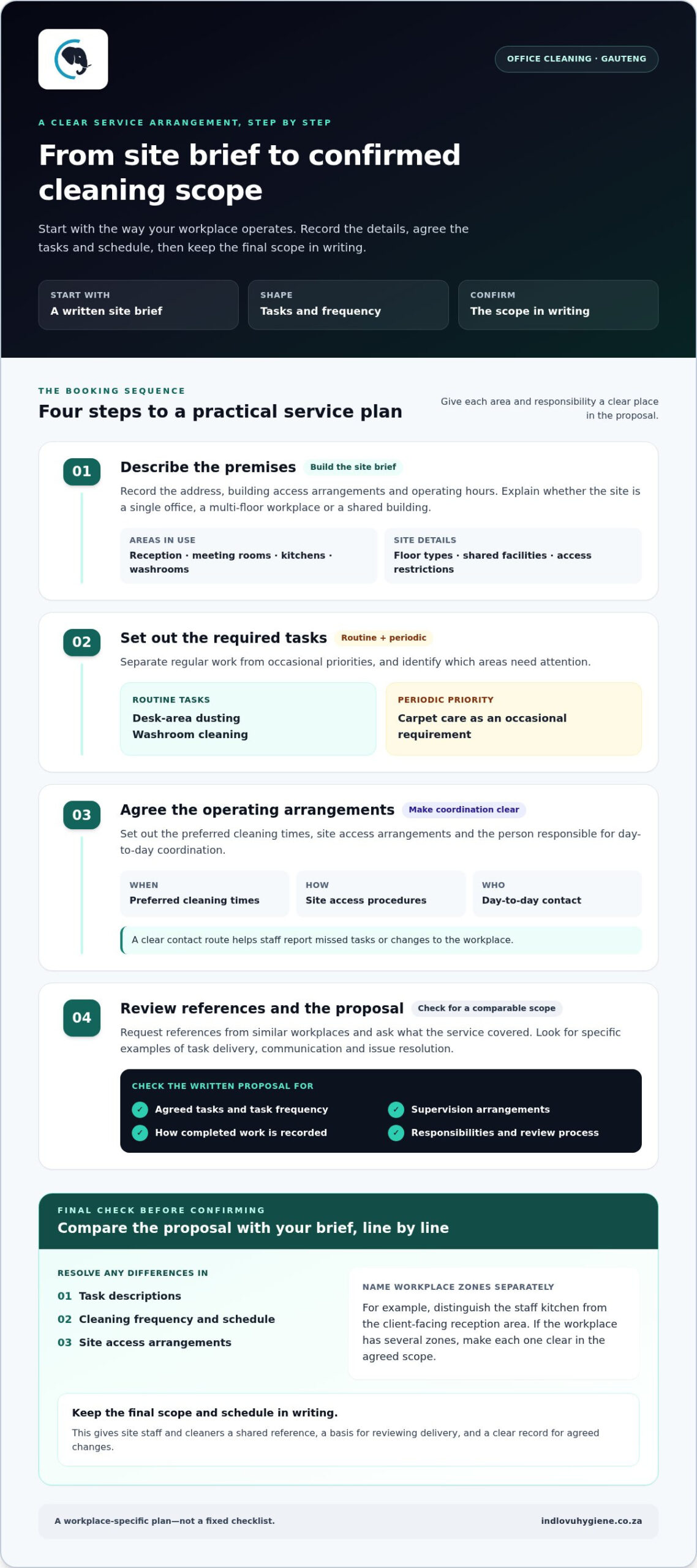
Start with a written site brief for your Gauteng workplace. Record the address, building access arrangements and operating hours. List the areas to be cleaned, such as reception, meeting rooms, kitchens and washrooms. Note floor types, shared facilities and access restrictions. These details help establish a practical scope before cleaning begins.
When choosing an office cleaning company in Gauteng, request references from comparable workplaces and ask what the service covered. Compare each written proposal with your site brief, including task frequency, supervision and how completed work is recorded.
- Describe the premises. State whether the site is a single office, a multi-floor workplace or a shared building. Include the areas in use and any access procedures for staff or visitors.
- Set out the required tasks. Separate routine work from periodic priorities. For example, list desk-area dusting and washroom cleaning as routine tasks, then identify carpet care as an occasional requirement.
- Agree the operating arrangements. Specify preferred cleaning times, site access and the person responsible for day-to-day coordination. A clear contact route helps staff report missed tasks or changes to the workplace.
- Review references and the proposal. Look for experience with similar premises and a comparable scope. Check that the written proposal records the agreed tasks, schedule, responsibilities and process for reviewing service quality.
Before confirming the arrangement, compare the proposal with your brief line by line. Resolve differences in task descriptions, cleaning frequency and site access. If your workplace has several zones, name each separately. For example, distinguish the staff kitchen from the client-facing reception area.
Keep the final scope and schedule in writing so site staff and cleaners have a shared reference. This also gives you a clear basis for reviewing delivery and recording agreed changes.
Commercial cleaning for offices and other workplaces
Commercial cleaning plans should reflect the premises, staff activity and work areas. A written proposal can then set out the tasks, schedule and oversight arrangements.
Cleaning services and provider coverage
Workplaces across Gauteng can arrange routine office cleaning, contract cleaning and site-specific tasks. A reception-led office, for example, has different priorities from a factory floor or shared building. Make sure the proposed coverage matches your site, operating pattern and cleaning requirements.
Gauteng-serving companies vary in service coverage and experience. Compare references from workplaces similar to yours, then match their examples to your site requirements. No single provider can be identified as having the best reviews without comparable, current evidence. Look for specific references describing task delivery, communication and issue resolution.
Charges and contract options
Cleaning may be quoted by the hour, by floor area or through a contract. Hourly charging relates the fee to labour time, while area-based pricing uses the measured space. A contract sets out recurring duties and frequency. The quote depends on the site size, task scope, schedule and access arrangements.
For a commercial cleaning proposal, provide a floor plan or describe each area. Identify washrooms, kitchens, meeting rooms and high-traffic zones. Ask for tasks, frequency, exclusions, supervision and review procedures in writing. Compare proposals against the same scope, not just the headline price.
Cleaning work in South Africa is subject to applicable labour, health and safety requirements. Assess how a provider manages staff conduct, safe work practices and access to your workplace. Request evidence of relevant insurance, personnel vetting and role-specific training. The U.S. Bureau of Labor Statistics notes that safety and ergonomics training can help reduce cleaners’ workplace injury risks.
Outsourcing risks include inconsistent task completion, access concerns and unclear responsibility for incidents. Set out access controls, reporting routes and service reviews in the agreement to address these concerns before cleaning begins.
When requesting a commercial cleaning proposal in Gauteng, specify your workplace type, required tasks and operating arrangements. This helps shape a scope suited to your premises.
Custom cleaning plans
A tailored plan connects each workplace zone with a cleaning task, frequency and responsible team. Map the premises, then identify high-use areas, restricted rooms and specialist surfaces. Reception, the staff kitchen and the boardroom have different priorities. Office cleaning services in Gauteng should reflect those differences instead of applying the same checklist everywhere.
Schedules can cover daily cleaning, selected weekdays or periodic tasks. Choose a pattern based on staff presence, visitor traffic and how often shared areas need attention. A busy reception may need routine attention, while a lightly used meeting room may need less frequent cleaning. Record the timing of each task in the service schedule.
Match staffing arrangements to the agreed workload and site access. You may need personnel assigned to regular duties or a planned team covering defined areas. Specify who handles washrooms, kitchens and waste points. Identify the supervisor or site contact who records issues and confirms changes.
- Map zones: separate workstations, reception, kitchens and washrooms.
- Set priorities: distinguish routine tasks from periodic floor or carpet care.
- Define access: note rooms with restricted entry or sensitive equipment.
- Allocate responsibility: assign tasks and a contact for service coordination.
Include workplace-specific instructions in the task schedule. State which desks require cleaning and which equipment must remain untouched. Note floor finishes and areas needing separate treatment. Clear instructions reduce uncertainty and help cleaners understand the agreed scope.
Review the plan when operations change. A new team layout, additional meeting space or different visitor pattern can shift cleaning priorities. Use service feedback to identify missed tasks or unnecessary visits. For office cleaning services in Gauteng, record any changes to the schedule or task allocation and share the revised plan with relevant site personnel.
For a multi-use site, divide duties by zone and frequency. This makes the custom plan easier to supervise and review.
Daily office cleaning
Organise the daily routine around your workplace’s opening pattern. Start with shared spaces used by staff and visitors. For example, clean reception surfaces before the first appointments. Then attend to kitchens, washrooms and busy walkways. A defined sequence helps cleaners complete essential tasks without disrupting work.
Use a task record for each shift, listing the areas covered, completed duties and any issue needing follow-up. For example, note a blocked sink or full waste point for the site contact. This makes handovers clearer and gives supervisors a practical basis for reviewing daily work.
- Reception: wipe accessible surfaces and remove visible waste.
- Work areas: clean agreed surfaces without moving papers or equipment.
- Kitchen: attend to counters, sinks and shared tables.
- Washrooms: clean fixtures and check that dispensers are ready for use.
Set clear boundaries around desks and equipment. Staff may leave documents or personal items in place, so the task sheet should state which surfaces cleaners may handle. For example, include desk edges and shared tables, but exclude computers and paperwork. This reduces uncertainty during routine cleaning.
Timing matters in an occupied office. Schedule noisy or disruptive tasks around meetings and busy periods. Where practical, clean meeting rooms after their scheduled use. Keep walkways clear during cleaning and return furniture to its agreed position. These instructions support a predictable routine in shared spaces.
Supervisors can review completed checklists and record recurring gaps. If kitchen tables are repeatedly missed, clarify where the task applies and what completion means. If a room is rarely used, adjust its routine through the agreed service process. Review notes with the site contact, then update the task record so cleaners follow the current instructions.
Use daily office cleaning arrangements to set a consistent routine for your workplace.
Indlovu Hygiene Solutions: Office Cleaning
Indlovu Hygiene Solutions provides office cleaning and recurring contract cleaning across Gauteng. Its service suits workplaces that need an ongoing arrangement shaped around their premises and operating requirements, including offices, factories and body corporates.
Use your scope to outline the areas, tasks and schedule your workplace requires. A clear brief establishes the service arrangement and gives everyone a shared basis for delivery. To arrange ongoing workplace cleaning in Gauteng, contact Indlovu Hygiene Solutions to discuss your requirements.
Set your next cleaning cycle up for success
As workplace needs change, keep the cleaning arrangement aligned with daily operations. Changes to team layouts, shared facilities or visitor access can affect how spaces are used. Treat the service scope as an operational document and record agreed adjustments so site teams and cleaners follow the same requirements.
Start by identifying your most important workplace priorities. Consider which areas need consistent attention, how cleaning fits around staff activity and who will oversee service reviews. This gives office cleaning services in Gauteng a clear operational purpose instead of leaving the arrangement as a general task list.
Indlovu Hygiene Solutions can help put those priorities into a workplace cleaning arrangement. Contact Indlovu Hygiene Solutions to discuss the cleaning requirements for your premises and take the next step towards a structured service plan.
Frequently Asked Questions
How do I compare office cleaning quotes and service-level agreements?
Compare quotes using the same premises and service assumptions, then examine how each agreement handles exceptions. For offices in Edenvale, Sebenza, Bedfordview, Greenstone, Kempton Park, Benoni, Boksburg, Sandton, Bryanston, Fourways, Midrand, Centurion, Rosebank, Wynberg, Northcliff or Houghton, review the complaint escalation route, inspection records, approval process for scope changes and invoicing method. These terms reveal operational differences beyond the quoted total.
Which office cleaning companies in Gauteng have the best reviews and references?
Compare references from similar workplaces and look for details about task delivery, communication and issue resolution. Then match the written proposal to your site requirements.
What insurance, vetting, and training should an office cleaning provider have?
Request evidence of relevant insurance, personnel vetting and role-specific training. Review how the provider manages staff conduct, safe work practices and workplace access. Safety and ergonomics training can help reduce cleaners’ workplace injury risks.