A template isn’t automatically the right choice for a straightforward cleaning arrangement. A commercial cleaning service agreement can use a template when the sites, tasks, schedule and payment terms are clear and routine. Choose legal review when the deal covers multiple sites, negotiated service levels, substantial liability exposure or complex termination terms.
It’s reasonable to want predictable costs and reliable cleaning without avoidable disputes about what the agreement covers. This guide explains how to assess pricing and payment provisions, renewal and termination clauses, and the schedule of tasks and service frequency. It also explains when a template may be sufficient and when legal review can help address deal-specific risks. Clear terms make responsibilities easier to manage, from routine office cleaning to specialist work, and give both parties a practical basis for monitoring delivery.
Key Takeaways
- Separate the recurring service fee from extra charges, and define what could trigger additional costs.
- Set out renewal, price-adjustment and termination terms so both parties understand how the arrangement can change or end.
- List the areas, tasks and cleaning frequency in the schedule, including any exclusions and specialist work.
- Use a template for a straightforward arrangement; consider legal review when the scope, sites or contractual risks are complex.
1. Pricing, payment terms, and additional fees
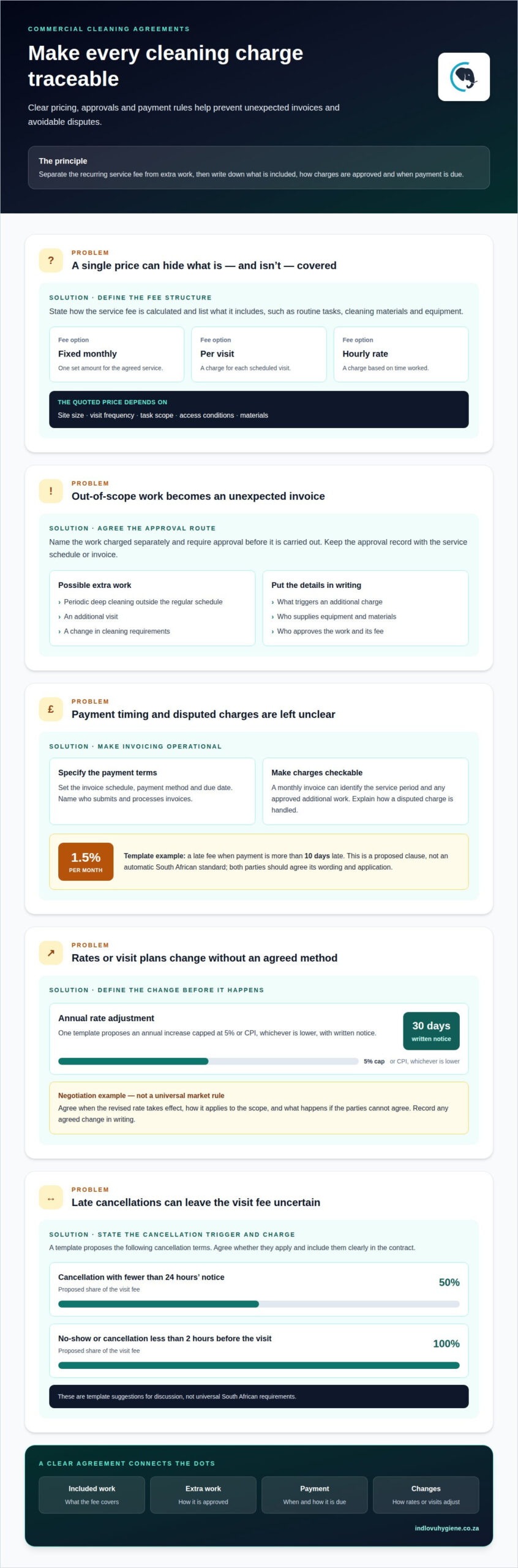
Start by recording how the fee is calculated in the commercial cleaning service agreement. Common structures include a fixed monthly amount, a charge per visit or an hourly rate. State what is included, such as routine tasks, cleaning materials and equipment, and identify work charged separately. For example, if periodic deep cleaning falls outside the regular schedule, describe it as additional work and explain how its fee is approved. The service price depends on site size, visit frequency, task scope, access conditions and materials, and is provided after a quote request.
Next, set the invoice schedule, payment method and due date. A monthly invoice, for example, should identify the service period and any approved additional work. Name the parties responsible for submitting and processing invoices, and specify how they handle a disputed charge. A template sample allows a late fee of 1.5% per month when payment is more than 10 days late. Treat this as a proposed clause, not an automatic South African standard; both parties should agree the wording and its application.
Additional fees need clear triggers. The agreement can explain how the parties approve work outside the included scope, such as an extra visit or a change in cleaning requirements. Set out whether the cleaning provider or the site supplies equipment and materials, and how a change affects the charge. A structured approval step helps prevent an informal request from becoming an unexpected invoice. Keep the approval record with the relevant service schedule or invoice.
Rate adjustments also require a defined method and notice process. One template proposes an annual adjustment capped at 5% or CPI, whichever is lower, with 30 days’ written notice. This is an example for negotiation, not a universal market rule. The parties should specify when a revised rate takes effect and how it applies to the agreed scope. The same template proposes a cancellation fee of 50% of the visit fee for cancellations with fewer than 24 hours’ notice, and 100% for a no-show or cancellation less than 2 hours before the visit.
2. Termination, renewal, and price-adjustment clauses
Set out the contract start date, initial term and renewal process. A fixed commencement date can create problems if unforeseen events delay mobilisation, so explain how the parties will agree on a revised start. State whether renewal happens automatically or requires written agreement, and when either party must give notice. This detail helps prevent a service period from extending through an unnoticed renewal.
For termination without cause, a template recommends 30 days’ written notice. It also describes 14 to 30 days’ notice as standard for ending a recurring cleaning contract. These are suggested terms, not universal South African requirements. Write the selected period clearly, including how notice must be delivered and when it takes effect. For termination following a material breach, the template suggests allowing 10 days to remedy the breach before ending the agreement.
A termination-for-convenience clause lets either party end the contract without alleging a breach, subject to the agreed notice period. State whether compensation applies to work already completed or committed costs, and explain how outstanding invoices are settled. Include practical close-out steps: return keys and access devices within 3 business days after termination, and confirm how site supplies and other property are handed back. This creates a defined transition rather than leaving responsibilities open.
Price-adjustment terms should explain the review point, calculation method, notice process and effective date. Keep these provisions consistent with the agreed renewal period. A clear clause states how the parties handle a proposed change if they cannot agree, including whether the existing rate continues during notice or either party may terminate. Record any agreed change in writing so the revised rate and service period remain traceable.
For recurring site services, documented operating terms support orderly delivery. Explore cleaning service arrangements as you shape the agreement’s operational scope.
3. Cleaning schedules and task frequency
A commercial cleaning service agreement should map each site area to its tasks and service frequency. Name spaces individually, such as reception, offices, washrooms, kitchens and shared corridors. Record any excluded areas so the cleaning company’s responsibilities do not depend on assumptions. The schedule can state which tasks happen during every visit and which require a separate booking.
Make the service schedule operational. Describe the required task, location, expected completion and frequency for each activity. For example, specify whether desks are wiped, floors vacuumed, bins emptied and washroom surfaces cleaned during each scheduled visit. Keep janitorial duties distinct from specialist or deep-cleaning work. This lets the parties compare completed work with written expectations.
Define specialist tasks in separate clauses. Carpet care, window cleaning or post-renovation cleaning may require different equipment, access arrangements or timing from routine work. State whether each service is included in the schedule or requires separate approval. For washrooms, define the agreed cleaning tasks and any bodily-fluid clean-up requirements explicitly, rather than leaving “washroom cleaning” open to interpretation.
The client’s responsibilities include providing agreed site access, identifying restricted areas and communicating operational changes. The cleaning company must perform the listed tasks at the agreed frequency and report completed work or issues through the agreed process. Naming the responsible contacts and reporting method in the document gives both parties a clear route for resolving missed tasks.
Schedule changes also need a defined process. The template suggests at least 48 hours’ written notice from clients requesting a change. State how urgent operational changes are handled, who approves them and how the revised schedule is recorded. Written updates help prevent a temporary change, such as a closed office area, from becoming an unintended permanent exclusion.
Commercial cleaning contract suitability
Yes. South African legal requirements may affect contractual, employment and workplace-safety responsibilities. The agreement should be consistent with applicable obligations, rather than treating private terms as a substitute for them. Identify which party handles each operational duty, including site access and incident reporting.
Set the contract length to match the service arrangement. State the start date, term, renewal method and notice process. A single-site routine cleaning arrangement may need different review points from a multi-site operation with specialist tasks. Record how changes in premises or scope affect the term. For liability, specify the insurance cover required, evidence to be supplied and who reports an injury or property damage. Define any limits, exclusions and claims process in clear terms.
Describe the intended independent contractor relationship accurately. The agreement should identify who directs cleaning tasks, supplies equipment, manages staff and handles employment responsibilities. The written label should reflect how the work is arranged in practice. If the parties’ understanding of employment status is uncertain, obtain South African legal advice before signing. This helps align operational responsibilities with the actual working arrangement.
Staff vetting, employment obligations and premises access need explicit clauses. State the agreed vetting process, who authorises access, how staff identity is recorded and which areas require restricted entry. For example, a facility can set out its sign-in procedure and rules for keys or access cards. The cleaning company’s responsibilities should cover its staff’s conduct and compliance with site procedures. The site’s responsible contact should communicate access changes and safety instructions through the agreed channel.
Define these terms before service begins, then record any amendments in writing. Discuss your cleaning contract requirements in relation to site access, staffing and operational scope.
Indlovu Hygiene Solutions
Indlovu Hygiene Solutions provides commercial cleaning for sites where clear scope, frequency and responsibilities matter. Its Office Cleaning, Contract Cleaning, Factory / Industrial Cleaning and Body Corporate Cleaning services can be structured around a site’s operational requirements. A written agreement can define the areas covered, scheduled tasks, reporting arrangements and process for changes, giving both parties a practical reference for service delivery.
Turn to Indlovu Hygiene Solutions when you need recurring cleaning for an office, factory, retail or workshop setting, or body corporate property. Share the site requirements and intended service scope to shape an arrangement around your operational needs. Contact Indlovu Hygiene Solutions to discuss your commercial cleaning requirements.
Put the agreement into operation
A signed document is most useful when it reflects how cleaning will work at the premises. Before service starts, align the agreed scope with the site’s operating routines, access arrangements and reporting process. This gives responsible staff a practical reference for day-to-day coordination and future service reviews. A commercial cleaning service agreement should support that working relationship, not sit apart from it.
Where your requirements involve regular workplace cleaning, Indlovu Hygiene Solutions provides Office Cleaning, Contract Cleaning and Factory / Industrial Cleaning. Discuss the premises and the service arrangement you need to establish a clear basis for a cleaning proposal. The agreement is not legal advice or a substitute for legal review when your circumstances call for it.
Contact Indlovu Hygiene Solutions to discuss your cleaning requirements and take the next step with a clear operational brief.
Frequently Asked Questions
Template vs lawyer, what fits your deal?
A template can suit a simple arrangement with one site, a defined scope and routine cleaning tasks. Legal review is more appropriate where several sites, negotiated liability terms, complex access conditions or specialist work create additional risks. For example, a multi-site operation with different service requirements at each premises may need tailored terms. Use a template as a starting point, not as a substitute for advice on complex obligations.
What are the next steps after preparing the agreement?
Once both parties agree on the terms, put them in writing and have them signed before services begin. Keep an executed copy with the relevant site contacts and operational records. For Gauteng arrangements, clear site details can help coordinate work across Edenvale, Sebenza, Bedfordview, Greenstone, Kempton Park, Benoni, Boksburg, Sandton, Bryanston, Fourways, Midrand, Centurion, Rosebank, Wynberg, Northcliff and Houghton. Record later amendments in writing.
What other documents might I need?
Supporting records can clarify responsibilities referenced in the contract. Depending on the premises and agreed service, these may include a written service-level agreement, site induction requirements, risk assessments, method statements and insurance documentation. Indlovu Hygiene Solutions can provide monthly service reports where applicable, along with compliance documentation on request. Keep documents relevant to the arrangement together and ensure their requirements do not conflict with the signed contract.
Who can use this agreement?
A cleaning services agreement can be used by a business engaging a cleaner or cleaning company for commercial premises, including offices, retail sites and industrial facilities. The same type of agreement can also support residential or specialised cleaning arrangements, but the scope and terms should match the work. For example, a factory’s access procedures and task requirements will differ from a home-cleaning brief.
What should a commercial cleaning service agreement include in South Africa?
It should identify the parties and premises, describe the agreed services, and set out how fees, invoices and additional work are handled. Include the service schedule, materials and equipment responsibilities, access arrangements, reporting process, liability provisions, renewal terms and termination procedure. For a South African site, state operational requirements in practical terms, such as who authorises access and where completed-service records are kept.
What service schedules, cleaning tasks, and performance standards should the agreement specify?
Specify each area, task and frequency, then state how completion will be recorded and assessed. For example, a schedule can distinguish routine floor cleaning from periodic carpet care, with separate sign-off records for each. Define the process for reporting an incomplete task, assigning follow-up action and reviewing recurring issues. Use observable standards, such as clean, dry floors in named areas, rather than subjective terms such as “excellent”.