Carpet care should follow foot traffic, not a single office-wide calendar. A commercial cleaning checklist for offices should schedule deep carpet cleaning every 3 to 6 months, with high-traffic lobbies and hallways cleaned quarterly. Private offices and conference rooms can often go 6 months between deep cleans.
That distinction matters: a busy entrance carpet collects soil faster than carpet in an occasionally used room. A consistent schedule matches carpet care to how each area is used, while routine vacuuming helps maintain it between deep cleans.
This checklist sets out daily, weekly and monthly cleaning tasks, with practical checks for carpets, washrooms, kitchens, shared surfaces and floors. Organise tasks by area and frequency, then adapt the routine to your office layout and level of use. A clear schedule makes responsibilities easier to assign and standards easier to maintain.
Key Takeaways
- Build kitchen checks around sink sanitation and the surfaces people use throughout the day.
- Keep reception areas and workstations orderly with a consistent routine for waste, dust and visible marks.
- Adjust carpet care to foot traffic, giving entrances and corridors more attention than less-used rooms.
- Include shared touchpoints such as telephones, keyboards and door fittings in the disinfection schedule.
Breakroom and kitchen sanitation
Use a breakroom checklist that covers food-preparation surfaces, shared appliances and the sink. Bacteria on office surfaces are lowest at the beginning of the workday after overnight cleaning and peak after lunch. Schedule an additional check after lunch, when spills and shared touchpoints have had more use.
- Clean and sanitise the sink. Include the basin, taps and surrounding surfaces, where food residue and splashes can collect.
- Wipe worktops and tables. Remove crumbs, spills and visible food marks so the next user starts with a clean surface.
- Clean appliance contact points. Wipe microwave handles, fridge handles and kettle switches, which staff touch during routine use.
- Check the microwave interior. Remove food splashes and residue, especially after reheating meals at lunchtime.
- Clear and clean the dining area. Wipe chair backs and table edges as well as the tabletop, where hands and bags make contact.
- Empty the kitchen waste bin. Replace the liner when needed and wipe the lid if food residue or spills are present.
- Inspect the floor beneath tables and counters. Remove dropped food and damp-mop soiled patches to address spills rather than spreading them.
- Restock shared cleaning supplies. Keep the designated cloths and cleaning products available for the next scheduled kitchen check.
Assign each task to a service period and record its completion on the kitchen checklist. After lunch, prioritise the sink, dining tables and appliance handles; at the end of the day, clean remaining surfaces and remove waste. This responds to increased use after lunch and prevents visible food debris being left for the next workday.
Clean food-contact areas separately from general touchpoints. Use the product and method specified for each surface, and replace cloths when they become soiled. These steps help keep shared-kitchen cleaning consistent.
What areas should be cleaned daily in an office?
A commercial cleaning checklist for offices should assign daily tasks by zone, record completion and flag issues for follow-up. In reception, remove fingerprints from entrance glass and clean the floor. At workstations, dust desks and furnishings, empty bins, and address shared equipment. Include washrooms, kitchens and other common areas according to their use.
- Reception: damp-wipe entrance surfaces and remove visible marks from glass.
- Workstations: dust horizontal surfaces, empty waste receptacles and dust telephones.
- Shared facilities: clean and polish drinking fountains or water coolers.
- Floors: vacuum carpet and damp-mop soiled hard-floor areas.
- Washrooms: clean and sanitise toilets and urinals, then replenish soap, tissue and towels.
Choose products and equipment suited to each surface and task. Use a vacuum, mop, cloths and labelled cleaning products, following the product directions. South African workplaces should follow established site health-and-safety procedures and product instructions. Cleaners should wear task-appropriate PPE and follow label directions for chemical handling, storage and use. Never mix cleaning products.
Weekly checks can cover carpet edges and areas beneath furniture, vertical furniture surfaces, and hard-floor buffing when needed. Monthly tasks can include high dusting and removing marks around switches and doorframes. Distinguish these periodic duties from daily work in your commercial cleaning checklist for offices.
Set the frequency for restrooms, kitchens and shared spaces according to occupancy, use and visible soil, with routine cleaning scheduled daily. Adapt task assignments to the office layout, staff presence and operating hours. Supervisors can verify completion by reviewing records and inspecting selected areas against the agreed scope. For recurring workplace cleaning, consider professional office cleaning from Indlovu Hygiene Solutions.
Daily rounds can extend dusting beyond desks to windowsills, chairs, tables and other furnishings, while also dusting telephones. Empty waste receptacles and replace liners as needed, so the bin is ready for continued use. Vacuum carpeting as part of the daily routine, including carpeted circulation areas. In busy office lobbies and entryways across South Africa, daily sweeping and wet-mopping help address routine floor-care needs; entry glass should also be checked for fingerprints as staff and visitors pass through.
How often should office carpets be deep cleaned?
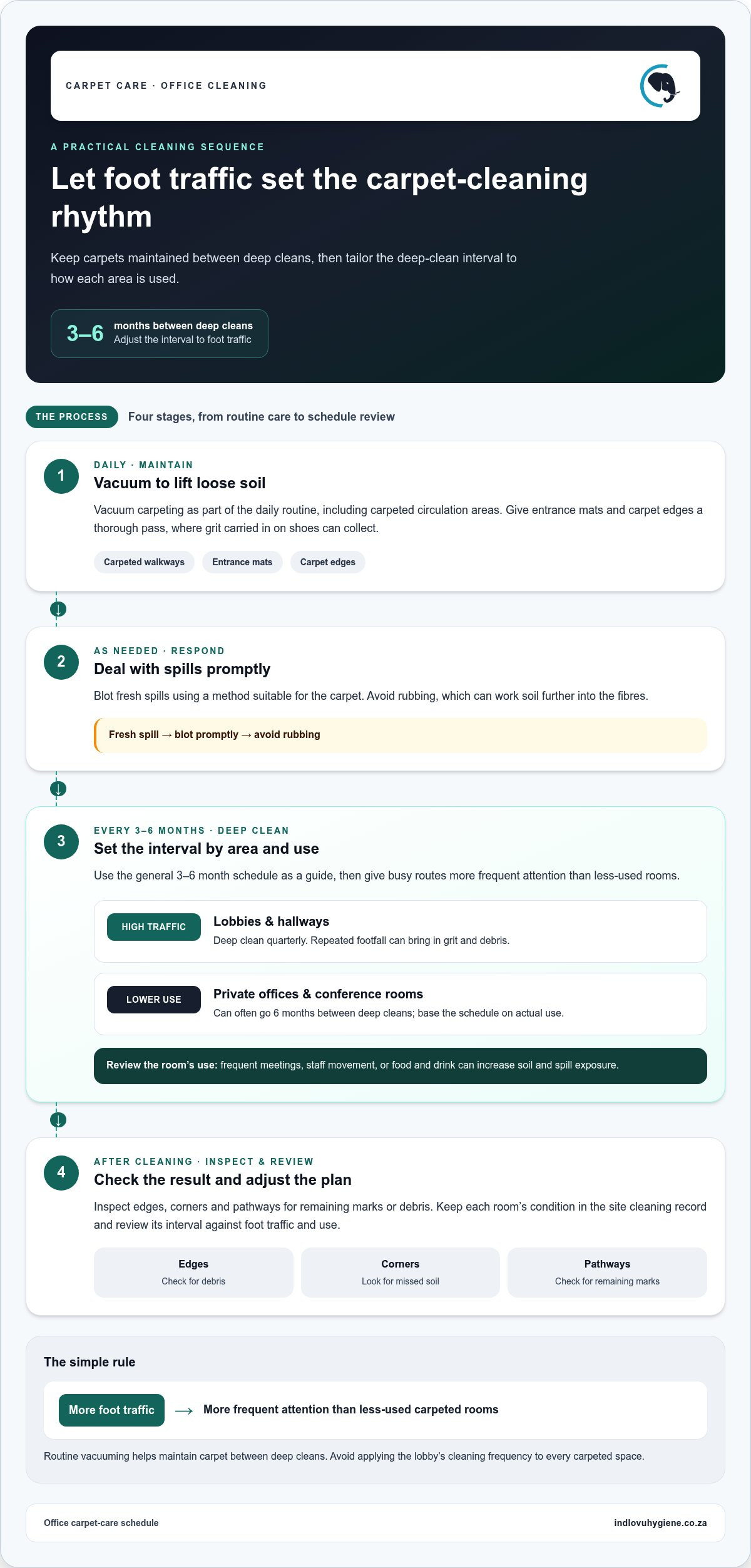
Schedule deep carpet cleaning every 3 to 6 months, adjusting the interval to foot traffic. Gauteng office entrances and corridors can collect tracked-in grit and debris, especially where staff and visitors pass repeatedly. Routine vacuuming removes loose soil between deep cleans, while prompt attention to spills helps prevent them settling into carpet fibres.
- Vacuum entrance mats and carpet edges thoroughly. These areas trap grit carried in on shoes.
- Check lobbies and hallways for visible soil. High-traffic carpet may need deep cleaning quarterly.
- Vacuum beneath furniture and around corners. These less visible areas can hold debris missed during a quick pass.
- Address fresh spills promptly. Blot the affected area using a method suitable for the carpet, rather than rubbing soil further into the fibres.
- Inspect carpet after cleaning. Check edges, corners and pathways for remaining marks or debris.
Private offices and conference rooms can often go 6 months between deep carpet cleanings. Their schedule still depends on use: frequent meetings, staff movement and food or drink increase soil and spill exposure. Review each room’s condition as part of the site cleaning record, rather than applying the lobby’s frequency to every carpeted space.
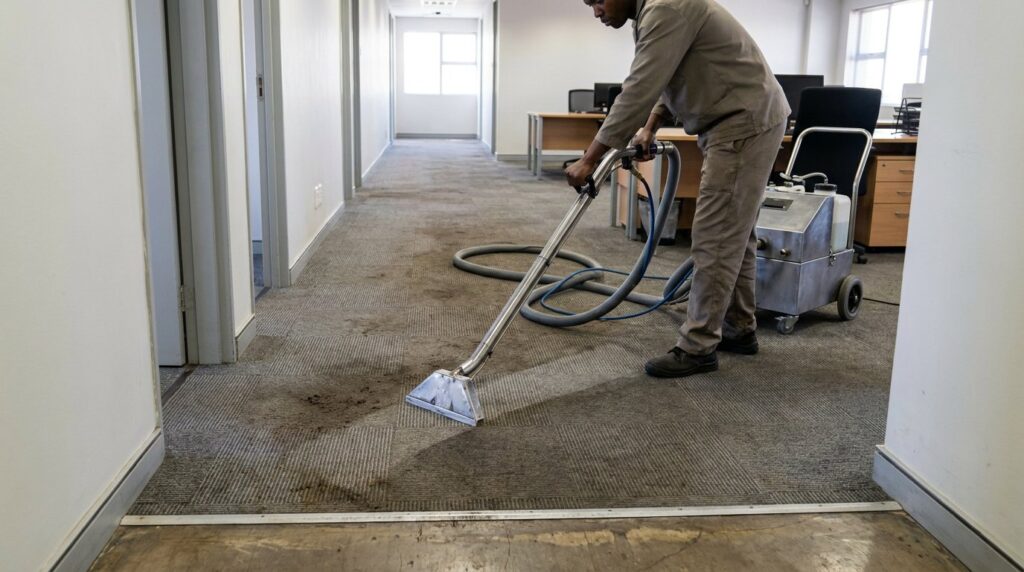
For an initial clean, extract carpet across the full area, including corners and edges, to address soil that surface vacuuming may miss. Set the next deep-clean date according to foot traffic, and continue routine vacuuming between cleans. A busy lobby and a lightly used meeting room need different schedules.
Record the area, its observed condition, the cleaning method completed and the next due date. This makes recurring soil patterns easier to spot. If entrance carpet repeatedly shows grit soon after cleaning, review the mat area and vacuuming coverage before changing the deep-clean schedule.
High-touch office surfaces to disinfect
Prioritise surfaces touched repeatedly during the workday, not just those that look marked. Office desks have been found to harbour 400 times more bacteria than toilet seats. Keyboards contain 70% more bacteria than toilet seats, and office phones can host around 25,000 germs per square inch. These figures reinforce the need for a defined disinfection routine.
- Disinfect desk tops and shared work surfaces. A typical office work surface harbours approximately 10 million bacteria.
- Wipe keyboards carefully. Follow equipment instructions and avoid applying liquid directly to electronic devices.
- Clean telephone touchpoints. Include the handset, buttons and shared reception phones.
- Disinfect light switches and doorframes. Monthly cleaning guidance includes removing fingerprints and marks from these areas.
- Clean shared entry touchpoints. Include door handles and other fittings used by staff and visitors.
- Use a clean cloth for each area. This limits transfer of soil between desks, phones and shared equipment.
Disinfectant wipes used on desk surfaces can reduce bacteria levels by 99% over a 48-hour period when cleaning is consistent. Follow the product label, including its contact time, and check that the product suits the surface. A quick wipe that dries too soon may not follow the product’s directions.
Set the schedule according to use. Include frequently shared touchpoints in routine cleaning and record completion. Monthly tasks should also cover telephone disinfection and marks around switches and doorframes. Include shared keyboards and reception phones in the cleaning round for those workstations.
Verify the result by checking that identified surfaces are visibly clean and that the task record is complete. Keep cloths and products organised by task, so staff can follow the same sequence across work areas. For a managed routine covering shared office surfaces, arrange professional office cleaning.
During the monthly office cleaning round, damp-wipe telephones with disinfectant, following the product directions and taking care around electronic equipment. Include telephone touchpoints in the scheduled task so they are not left to occasional spot-cleaning.
Monthly cleaning should also address fingerprints and marks around light switches and doorframes. Include these areas in the monthly check, remove visible marks and record completion alongside other scheduled tasks. This reminds staff to cover both telephone touchpoints and marked areas during the round.
Indlovu Hygiene Solutions: Office Cleaning
Indlovu Hygiene Solutions provides Office Cleaning for workplaces that need a defined routine for work areas, shared spaces and carpet care. Its Contract Cleaning service supports recurring requirements, with tasks organised around your premises and operating needs.
Use the checklist to identify priorities such as daily workstation cleaning, washroom upkeep and scheduled carpet deep cleaning. A written scope can specify the areas covered and cleaning frequency, giving site teams a clear service reference. For facilities managers overseeing several premises, consistent task records also support routine oversight.
Contact Indlovu Hygiene Solutions to discuss your office cleaning requirements and a suitable service arrangement.
Put a dependable cleaning routine in place
A checklist works best when every task has an owner, a defined frequency and a clear completion record. Use the commercial cleaning checklist for offices as a working document, adjusting it as occupancy, room use or site requirements change. This keeps the routine practical and gives facility teams a consistent basis for reviewing standards.
Indlovu Hygiene Solutions provides Office Cleaning and Contract Cleaning for recurring workplace requirements, as well as Factory / Industrial Cleaning. Contact the team to discuss a cleaning arrangement suited to your premises and operational needs.
Contact Indlovu Hygiene Solutions to take the next step towards a structured cleaning plan for your workplace.
Frequently Asked Questions
What should a daily office commercial cleaning checklist include?
Include each cleaning zone, its assigned task, completion status and space to record faults or access issues. In a Gauteng office, add a post-meeting reset for booked rooms and inspect entrance mats after wet-weather foot traffic. Record urgent spills for prompt attention. Before the next shift, have a supervisor review incomplete items and log any required follow-up.
What cleaning products and equipment are best for commercial office cleaning?
Choose products and equipment suited to each surface and task. Use a vacuum, mop, cloths and labelled cleaning products according to their directions. For spills and carpet cleaning, use a method appropriate for the carpet.
What PPE and safe chemical-handling procedures should office cleaners follow?
Wear task-appropriate PPE and follow product-label directions for chemical handling, storage and use. Never mix cleaning products.